Build research skills
Students practise methods connected to research, critical thinking, source work and presenting results.
Ungt vísindafólk is Iceland’s national competition for young people who want to work on a research project, develop an idea, present their results and take part in a community of students interested in science, research and innovation.
The goal is to give students an opportunity to work independently on their own project, learn how to formulate a research question, choose a method, work with data or solutions, and present results clearly.
Students practise methods connected to research, critical thinking, source work and presenting results.
The competition encourages students to choose a topic they find interesting and develop it through their own questions and ideas.
Projects can connect to school, society, environment, technology, health, natural sciences, design or other areas that matter to young people.
Ungt vísindafólk is intended for upper-secondary students who want to present research, an experiment, a prototype, data analysis, a social issue or other research-related work.
For students who want to take the next step with a project they have worked on or want to develop a new idea.
Teachers can help students define a project, shape a research question and prepare a presentation.
Projects may be supported by teachers, specialists, schools or others who can provide useful feedback.
A student or team chooses a question, problem or idea that can be investigated or developed.
The project is developed through a method, data, experiments, design, sources or testing.
Students present what they did, why it matters and what results they found.
Projects receive feedback from a jury, and selected projects may have the opportunity to go further.
A good project does not need to be perfect or large. Most importantly, it should be clear, well explained and based on careful work.
The project explains what is being investigated, tested or developed.
Students can describe how they worked on the project and why they chose that method.
Results are presented clearly, and students can answer questions about the project.
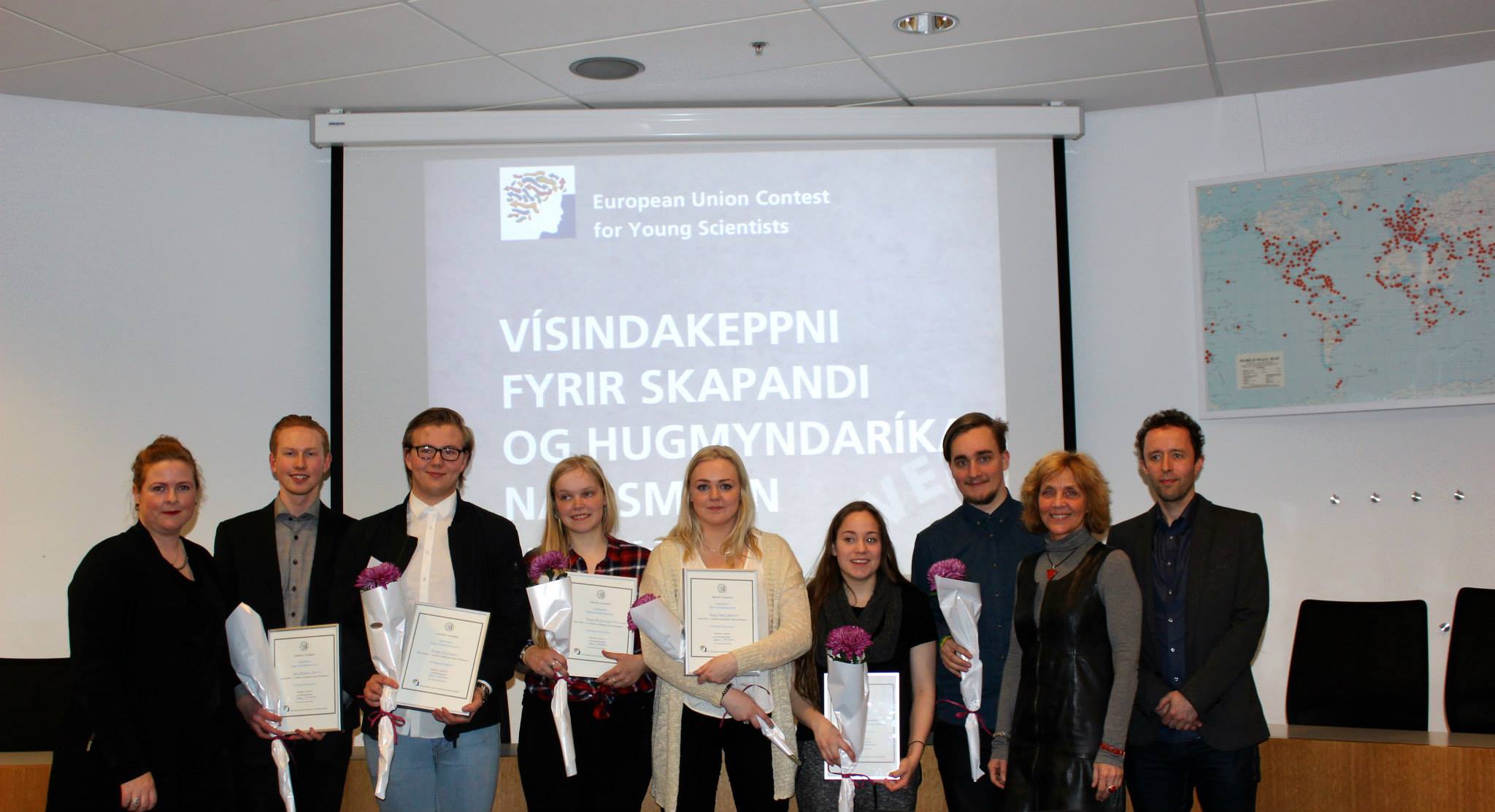
Selected participants from the national competition may have the opportunity to represent Iceland at the European Union Contest for Young Scientists, EUCYS. There, young scientists from Europe and beyond present their work, meet peers with similar interests and take part in an international science community.
Applications are planned to open in December 2026, with the national competition taking place in spring 2027. Students can start developing their projects this autumn.